


WhatsApp Messenger
3.47.00 Reviews
App Specs
- Version
- 1.1
- Updated On
- License
- Free
- Downloads
- 100,000+
- Developer
- Zyventa Solution
- Categories
- Education
- Platform
- Android
Screenshots
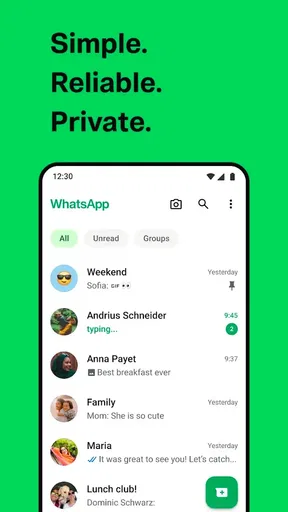
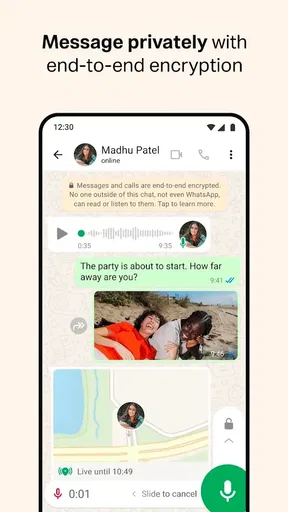


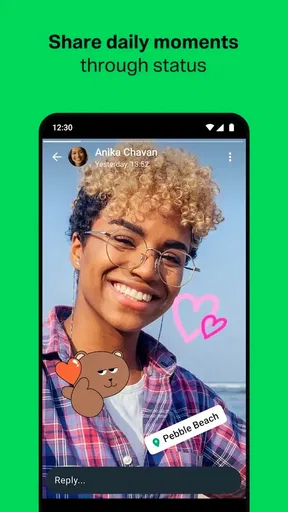
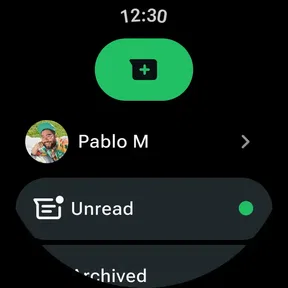
 Analysis by AppCompare
When a message arrives while I’m between errands, I want to answer quickly, share the right detail, and get back to what I was doing. That everyday need is the clearest way to judge WhatsApp Messenger: not as a grand communication suite, but as a familiar messaging app whose value depends on whether the people I need to reach are there and whether its simple approach suits my habits.
From a quick message to a finished conversation
I find the clearest way to judge this app is to follow one ordinary exchange from the moment a need comes up to the point when everyone knows what to do. That makes it easier to see where a simple chat helps, where a handoff needs extra care, and which habits prevent a quick message from becoming a confusing thread.
Start with the people you already need to reach
WhatsApp Messenger is an education-category app from Zyventa Solution, although its store short description identifies it as a messenger rather than a learning tool. That mismatch is worth noticing before installing: I would choose it for communicating, not for lessons, study materials, or classroom organization. Its store summary emphasizes simplicity, reliability, and privacy, but those words are not a substitute for checking whether it fits the way you actually communicate.
A practical first question is whether the people you message most often use it. If a family group, a friend abroad, or a small team already expects messages there, the app can give you a direct place to continue those conversations. If everyone around you prefers another messenger, installing this one may create one more inbox to check instead of making communication easier.
The app is free and is rated for Everyone. Its average rating is 3.4 from around 920 ratings, while it has over 100,000 installs. Those figures suggest that people have tried it in meaningful numbers, but they don’t tell me whether it will work smoothly for your particular contacts or routine. I’d treat the rating as a prompt to decide based on your needs, not as a verdict.
Keep the first exchange deliberately simple
For an ordinary conversation, the useful workflow is uncomplicated: open the app, find the person or group you need, write a clear message, and make sure the recipient has enough context to act on it. That last step matters more than it sounds. “I’m there” is easy to misunderstand when a group is discussing several plans; “I’m outside the north entrance” is much more useful.
I’d also use a short message to establish what needs a reply and what is just an update. For example, when arranging a pickup, I’d send the time and location together rather than scattering them across separate notes. This is not a special feature; it is a small habit that makes a messenger more dependable, especially when a conversation is moving quickly.
Worth Reading Before You Choose

EA SPORTS FC Mobile 26 Is a Bigger Football Game, but It Takes Time

Flipboard Shows What News Apps Must Do Beyond the Feed

Switching to Android Auto Means Rethinking Your Driving Routine

Google Calendar Makes a Crowded Week Easier to Manage

Ludo King Makes the Most of the Minutes Between Plans

Baby Panda World Brings Quick Play to Modern Phones, but Its Game Library Feels Busy
WhatsApp Messenger is currently version 1.1 and supports Android 7.0 or later. That makes the minimum system requirement easy to check before downloading: look at your Android version first, particularly if you are keeping an older phone in service. A newer app version or an eligible operating system does not, by itself, guarantee that the people you want to contact will be using the same service.
Make the handoff clear
Messaging often starts with one person and ends with another taking action. I might ask a relative to collect a parcel, then pass the address and timing to someone else who is helping. In that kind of handoff, I find it safer to put the essential instruction in one plainly written message instead of assuming everyone has followed the whole thread.
Before sending something that another person will rely on, I’d check names, dates, and locations in the text itself. A quick correction is easier than asking the recipient to search through a long conversation. If the task is important, I’d also make the next action explicit: who is doing it, what they need, and when it should happen. This approach reduces ambiguity without relying on any particular app feature.
Groups can be useful when several people need the same update, but they can also blur responsibility. If a message is directed at one person, name them in the wording rather than assuming the whole group will infer who should respond. For a family plan, for instance, I’d separate the decision from the discussion: state the proposed time, ask the person who needs to confirm, then send the final arrangement once it is settled.
Turn the conversation into an outcome
The best result is not a busy chat; it is a task completed or a plan everyone understands. After an exchange, I’d look for a clear endpoint: the pickup is confirmed, the meeting place is agreed, or the person who owns the next step has acknowledged it. If no one has confirmed, I would not treat a sent message as proof that the plan is settled.
This is especially useful for everyday coordination. Imagine you’re leaving work and need someone at home to bring in a delivery. Send the request with the relevant timing, wait for a clear response, and avoid adding unrelated conversation to the same exchange until the instruction is understood. The practical benefit comes from keeping the communication concise and easy to follow, not from assuming that a messaging app will manage the task for you.
For information you may need later, I’d keep the important details together in a single message that is easy to recognize in the conversation. That is more reliable than relying on memory or scrolling through several partial updates. If the details change, send a corrected, complete version rather than a vague “actually, never mind” that leaves the recipient guessing which part changed.
Know when the flow breaks
A messenger works best when both sides can use it. If a contact is not on WhatsApp Messenger, or if they are committed to a different service, the conversation may have to move elsewhere. That handoff can split context: one person sees the original plan, another sees the update, and someone else misses both. For a group that already coordinates in another app, joining only to reach one member may not be worth the extra inbox.
There is also a difference between a convenient chat and a dependable record. I would not use a casual conversation as the only place for a critical appointment, formal work instruction, or detail that must be preserved according to an organization’s rules. In those cases, a calendar, email, or dedicated workplace tool may provide a better process. WhatsApp Messenger can carry the conversation, but users still need to decide what counts as the authoritative version.
Privacy deserves the same practical caution. The store summary presents privacy as part of the app’s appeal, but I would still avoid sending sensitive information casually and would check the app’s current settings and policies before relying on it for confidential conversations. A reassuring tagline is not a reason to share passwords, financial details, or information that should be handled through a more appropriate channel.
Another friction point is message overload. When updates, jokes, questions, and decisions all land in the same group, the important instruction can disappear in the scroll. I’d keep group messages focused, move a one-to-one matter into a direct conversation when that is more appropriate, and repeat the final agreed action clearly. If a team needs assignments, deadlines, and an enduring record, a task manager or workplace platform is usually a better fit than a chat thread.
Who I’d recommend it to
I’d consider WhatsApp Messenger if the people I care about already use it and I want a straightforward place for everyday conversations and coordination. It is a more natural choice for someone who values quick exchanges over elaborate organization, and its free price removes a purchase decision. The Everyone age rating also makes it broadly accessible, though families should still make their own choices about communication habits and online safety.
I would look elsewhere if I needed a dedicated education app, a structured project workspace, or a service that every member of my group already uses. The education category alone should not lead anyone to expect study tools: the short description points to messaging. For organized assignments, I’d choose a platform built around tasks and materials; for a group whose members use another messenger, I’d avoid creating a second communication channel unless there is a clear reason.
Compared with the usual alternatives, the deciding factor is less about a feature checklist and more about where conversations already happen. A general messenger is convenient when contacts are reachable there. Email is often better for formal, searchable exchanges that need a clear subject and longer explanation, while a calendar is better for preserving a date or appointment. I’d use each for the job it handles best rather than forcing every interaction into chat.
Small habits that make the workflow easier
One useful trick for a busy group is to treat the chat as a sequence of decisions, not as the place where every thought has to stay visible forever. I’d put the question first, give the context in the same message, and say what kind of response would settle it. “Can you collect the parcel before dinner? Please confirm if you can” is easier to act on than a vague opening followed by several messages explaining the request.
When a plan changes, I’d restate the full updated arrangement rather than correcting just one fragment. If the time moves but the location stays the same, include both in the new message. That may feel repetitive, but it gives anyone catching up a clean version to follow and reduces the risk that someone acts on the earlier instruction. It is a simple workaround for the way conversational threads mix old and new details.
I’d also be selective about which conversations become group discussions. A group is helpful when everyone needs the answer; it is noisy when only one person can act. For a shared errand, I might use the group to settle the plan, then send the person responsible a direct, concise reminder. That handoff keeps the wider group informed without making every small follow-up everyone’s problem.
Choosing it over another communication tool
If I were choosing between this and a different messenger, I would start by asking where my contacts already respond reliably. The app that a group actually checks is often more useful than a theoretically richer alternative that half the group ignores. But if my friends or coworkers have already settled on another service, I would not ask them to maintain parallel chats without a clear benefit; divided conversations make missed details more likely.
For longer explanations, email still has an advantage because a subject and a more deliberate format make it easier to revisit a formal exchange. For a date that must stay visible, a calendar is a better destination than a message buried in conversation. For ongoing work with owners and deadlines, a dedicated project tool offers a clearer structure. I see a messenger as the quick coordination layer around those tools, not a replacement for all of them.
That distinction also helps answer whether this is suitable for school or work. I would use it for an informal reminder only when the people involved already communicate there and the setting allows it. I would not assume that its education category makes it a classroom platform, or that a group chat is an adequate place to manage coursework, official notices, or sensitive workplace records. The right choice depends on the institution’s process, not just on convenience.
My take after weighing the trade-offs
What I like about the proposition is its modest focus: a place to exchange messages without making the user think of it as a learning or productivity system. The main practical strength is the possibility of keeping a conversation moving from a quick question to a confirmed plan. The trade-off is that successful use depends heavily on contact adoption and on people communicating clearly; neither a familiar name nor a simple interface can fix a scattered group or an unclear instruction.
With Zyventa Solution as its developer, a free download, and a 3.4 average rating, I’d approach this particular release with ordinary care rather than assuming it will suit everyone. I’d check compatibility, install it only if my contacts have a reason to use it, and test it first with a low-stakes conversation. That gives me a practical sense of whether the app fits my routine before I depend on it for anything important.
My recommendation is conditional but straightforward: choose WhatsApp Messenger when it matches the communication habits of the people you need to reach, and keep important handoffs explicit. Skip it if you need lessons, formal records, or a shared workspace, or if it would simply duplicate a messenger your group already prefers. Used for the right kind of conversation, it can be a convenient everyday option; used as a substitute for every other tool, it is likely to create more friction than it removes.
Pros
- Free messaging and voice or video calls over the internet.
- End-to-end encryption protects personal chats and calls.
- Works across Android
- iOS
- desktop
- and the web.
- Group chats make it easy to stay in touch with several people.
- Share photos
- videos
- documents
- and your live location.
Cons
- A phone number is required to create an account.
- You and your contacts need internet access to communicate.
- Large groups can generate a lot of notifications.
- Cloud backup privacy depends on your backup settings.
- Some features and payment options vary by country.
FAQs for WhatsApp Messenger
What is WhatsApp Messenger, and what can I use it for?
WhatsApp Messenger is a communication app for sending messages and making voice or video calls over an internet connection. You can chat one-to-one or in groups, share photos, videos, documents, voice messages, and your location, and use features such as Status updates. It is available for Android and iOS, with additional ways to access chats on a computer. Some features may vary by device, region, or app version.
Is WhatsApp Messenger free to download and use?
WhatsApp Messenger is generally free to download and does not charge a subscription fee for its core messaging and calling features. However, the app uses Wi-Fi or mobile data, so your carrier may charge for data usage, especially when sharing media or making calls away from Wi-Fi. Check your mobile plan and your device’s app store listing for current availability, requirements, and any region-specific details.
Do I need a phone number to create a WhatsApp account?
Yes. Setting up a WhatsApp account normally requires a phone number that can receive a verification code by SMS or phone call. After verification, you can add a profile name and photo and choose who can see certain account details through the privacy settings. Keep access to your number in mind if you change phones or numbers, and use the app’s account-transfer or number-change options where appropriate.
Are WhatsApp messages and calls private and secure?
WhatsApp uses end-to-end encryption for personal messages and calls, meaning their content is designed to be readable only by the participants using their devices. Still, privacy depends on more than encryption: recipients can save or forward content, and notifications, linked devices, or cloud backups may affect what is accessible. Review privacy and backup settings, protect your phone with a screen lock, and be cautious with unfamiliar links and requests.
Can I use WhatsApp on more than one device, and what should I know before downloading it?
WhatsApp supports linked devices, allowing you to access your account on compatible computers and other supported devices while your primary account is set up on a phone. Availability and steps can change with app updates, so check the current in-app linking instructions. Before downloading, confirm your device meets the app store’s operating-system requirements, install it from an official store, and ensure you have enough storage and a reliable internet connection.


